How to Read Your LabCorp or Quest Results: A Plain-English Guide (2026)
Why Your Lab Report Looks Confusing
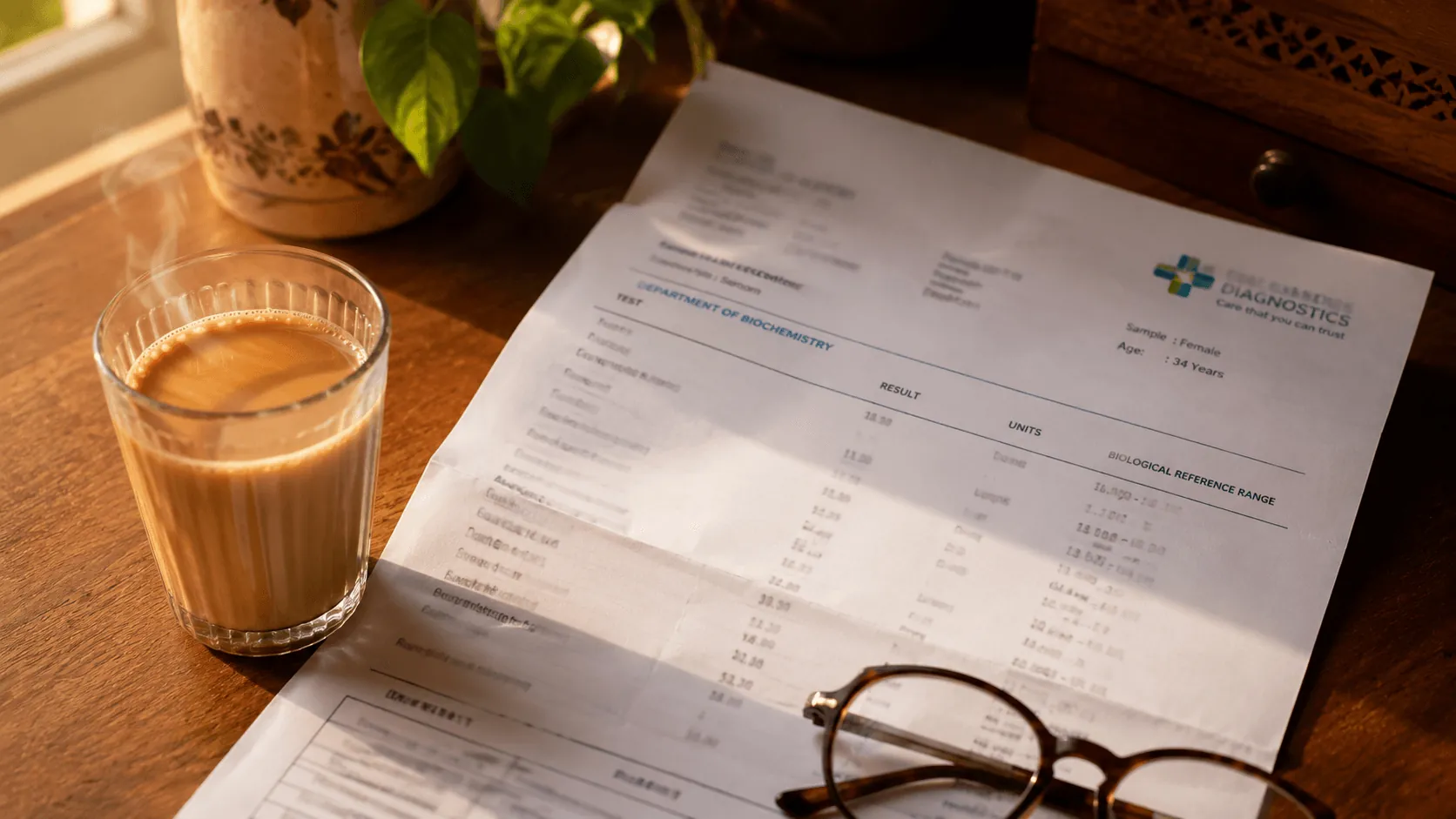
You just got a notification from the LabCorp patient portal. You open it, see rows of numbers, letters like "H" and "L" scattered throughout, and reference ranges that mean nothing without context. You're not alone — almost half of Americans who receive lab results through an online portal end up searching the internet for answers before speaking to their doctor.
This guide explains how to read a LabCorp or Quest Diagnostics report clearly, what the flagged values actually mean, and what you should do next.
The Structure of a LabCorp or Quest Report
Every LabCorp and Quest report follows the same basic structure:
- Patient information — Your name, date of birth, ordering physician, and collection date
- Test name — What was ordered (e.g., "Comprehensive Metabolic Panel" or "Lipid Panel")
- Your result — The measured value
- Reference range — The expected range for a healthy adult
- Flag — "H" for high, "L" for low, "A" for abnormal, blank for normal
The flag column is what most people focus on — and it's where the anxiety usually starts.
What "H" and "L" Actually Mean
Seeing a flag does not mean you have a disease. Reference ranges are based on population statistics: they represent the middle 95% of healthy adults. That means 5% of healthy people will always fall outside the range on any given day.
A single flagged value in an otherwise normal report, especially a mild one, is usually not cause for alarm. Context matters enormously:
- Was the sample collected correctly? (Fasting required? Dehydration?)
- Is this a new finding or one that's been stable for years?
- Are multiple related values all pointing in the same direction?
This is exactly why labs recommend confirming abnormal results with your doctor rather than acting on a single number.
The Most Common Panels — Explained
Complete Blood Count (CBC)
The CBC measures your blood cells. Key values:
- WBC (White Blood Cells): Normal 4.0–11.0 K/uL. High = possible infection, inflammation, or stress. Low = immune suppression, some medications.
- RBC (Red Blood Cells): Normal 4.2–5.8 M/uL for men, 3.8–5.2 for women. Low = anemia. High = dehydration or polycythemia.
- Hemoglobin: Normal 13.5–17.5 g/dL for men, 12.0–15.5 for women. Directly reflects your body's oxygen-carrying capacity.
- Hematocrit: Normal 41–50% for men, 36–48% for women. The percentage of your blood made up of red cells.
- Platelets: Normal 150–400 K/uL. These help blood clot. Very low platelets require prompt attention.
- MCV (Mean Corpuscular Volume): The size of your red blood cells. Low MCV often indicates iron deficiency; high MCV often indicates B12 or folate deficiency.
Comprehensive Metabolic Panel (CMP)
The CMP checks your chemistry — kidney function, liver function, and blood sugar.
- Glucose: Normal 70–99 mg/dL (fasting). 100–125 is pre-diabetic. 126+ on two tests = diabetic.
- BUN and Creatinine: Kidney function markers. High values, especially together, suggest the kidneys are working harder than normal.
- AST and ALT: Liver enzymes. Elevated values can indicate liver stress, but many common things — intense exercise, certain medications — raise them temporarily.
- Sodium and Potassium: Electrolyte balance. Significant deviations matter clinically; borderline values rarely do.
Lipid Panel
- Total Cholesterol: Below 200 mg/dL is desirable.
- LDL (the "bad" cholesterol): Below 100 mg/dL is optimal; below 70 for high-risk patients.
- HDL (the "good" cholesterol): Above 60 mg/dL is protective.
- Triglycerides: Below 150 mg/dL is normal. High triglycerides are often linked to diet and metabolic health.
Thyroid Panel
- TSH (Thyroid Stimulating Hormone): Normal 0.4–4.0 mIU/L. High TSH usually means an underactive thyroid (hypothyroidism). Low TSH means an overactive thyroid (hyperthyroidism).
Three Things to Do With an Abnormal Result
- Don't spiral on Google — Health searches are famously designed to escalate anxiety. One flagged CBC value is not a cancer diagnosis.
- Check the magnitude — A Vitamin D of 28 ng/mL (reference: 30–100) is barely below range. A Vitamin D of 8 ng/mL is a meaningful deficiency. Scale matters.
- Call your doctor's office — Most practices have a nurse line that can tell you in minutes whether a result needs urgent follow-up or just a note for your next visit.
The Ashvi Approach
Ashvi's AI — Velora — explains every value in your LabCorp or Quest report in plain English. Upload your PDF from the patient portal, and Velora tells you what each number means, flags what's worth discussing with your doctor, and tracks how your values change over time.
For NRI families managing parents' health in India while living in the US, Velora can also explain the same report in Hindi, Tamil, Telugu, or Bengali to the family member who needs to understand it most.
Ashvi Health is opening early access in small groups. Join the waitlist to request an invitation.
Curious about your own report?
Velora reads your values back to you in your language, then helps you prepare what to ask a clinician.